




Introduction — Visa for Copenhagen: what you need to do depending on your nationality in 2026
Going to Copenhagen in 2026 is about more than booking a flight and a hotel: first you need to check whether your nationality requires a visa, what type of visa fits your plans (tourism, work, study, family reunification), and which exact steps to complete before you travel. This updated general guide aims to give you a clear, practical roadmap — from EU citizens who can cross the border with just an ID card, to third‑country nationals who may need fingerprinting, proof of funds and embassy interviews.
Copenhagen (København), the capital of the Kingdom of Denmark, attracts visitors for cultural tourism, higher education and a dynamic job market. Visa rules are mainly based on the Schengen framework for short stays (short‑stay C visa), while long stays over 90 days (residence and work or study permits) are handled nationally by the Danish Agency for International Recruitment and Integration (SIRI). In 2026 the rules still rest on a few steady principles: external border control for Schengen, mandatory travel health insurance covering at least EUR 30,000 for Schengen applicants, proof of accommodation and sufficient financial means, and biometric data submission (fingerprints and photo) for most applicants.
This guide includes: typical document checklists, addresses and opening hours for Denmark’s main services in Copenhagen and some major capitals, fees in euros for different visa types, usual processing times, and practical tips to speed up an application or avoid refusals — for example by checking past Schengen visas, getting documents translated by a certified translator, and booking appointments early at visa centers (VFS Global or TLScontact depending on the country). You’ll also find sections divided by major nationality groups: EU/EEA/Swiss citizens, visa‑exempt nationalities for short Schengen stays, visa‑required nationals, and specific steps for work, study or family reunification permits via SIRI and municipal services in Copenhagen.
Plan for time: a standard Schengen visa application is usually decided within 15 calendar days, but it’s common to allow 30–60 days for complex cases or long‑term permits. Finally, this guide highlights concrete places in Copenhagen where you can get help: SIRI (Nyropsgade 30), the municipal desk (Københavns Rådhus, Rådhuspladsen 1), and key entry points like the international airport (Københavns Lufthavn, Lufthavnsboulevarden 6, 2770 Kastrup). The addresses, hours and fees listed are those published by the authorities in 2026; always double‑check official sites before submitting an application.
1) EU/EEA/Swiss citizens — freedom of movement and formalities in Copenhagen
For citizens of the European Union, the European Economic Area (Iceland, Liechtenstein, Norway) and Switzerland, Denmark applies freedom of movement: no visa is required to enter, work or study in Copenhagen. You can stay longer than 90 days, but beyond three months certain administrative steps are required to regularize your status if you plan to settle. These steps include registering with municipal authorities and, if you work, getting a personal identification number (CPR number) to access healthcare and social security.
Main administrative steps:
- ID card or passport: Present a national ID card or valid passport on arrival. Danish authorities don’t require a visa but can ask for identity at border checks or during internal controls.
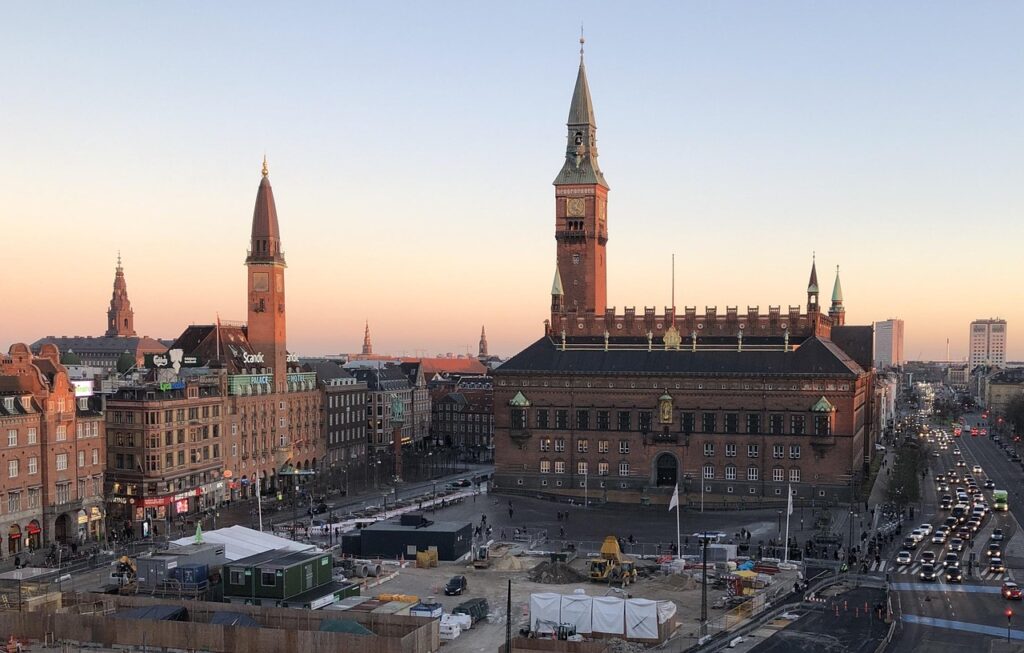
- Register with the Population Service (Folkeregister): If you intend to stay more than three months, you must register at your municipality’s citizen service. In Copenhagen the main desk is Københavns Rådhus, Rådhuspladsen 1, 1550 København V. Hours: typically Monday–Friday 9:00–15:00 (check updated times on københavns.dk). Bring a passport photo, employment contract or proof of resources, and proof of address (rental contract or utility bill). The service is often free.
- CPR number: To get a CPR (personal number), required to open a bank account, access healthcare and certain benefits, you must have an employment contract or be enrolled in an educational institution.
- EU/EEA residence card: Denmark sometimes issues a registration certificate that formalizes your registration: the EU registration certificate (often called “registration of residence”) if you are employed, studying or self‑employed.
Local tips: on arrival book an appointment via the Copenhagen municipality website (kobenhavn.dk) for registration; slots fill up fast, especially in September (university intake) and in spring (hiring season). To open a bank account, banks like Danske Bank (Holmens Kanal 2-12, 1060 København K) or Nordea (branches along Strøget) typically ask for a CPR or an employer letter. Those without a contract but with sufficient funds must prove steady financial means and maintain private health insurance until they obtain CPR.
2) Short‑stay (Schengen) visas in 2026 — who needs one and how to apply
The short‑stay Schengen visa (type C) covers tourism, family visits, business and airport transit for up to 90 days within a 180‑day period. Denmark follows Schengen rules: some nationalities are exempt (e.g. United States, Canada, Japan, Australia, South Korea) while many countries in Africa, Asia and Latin America require a visa. The exact list of visa‑exempt countries is updated by the European Commission and the Danish Ministry of Foreign Affairs; always check before you travel.
Steps for nationals who need a Schengen visa:
- Book an appointment: Schedule an appointment at the visa application center accredited for Denmark in your country (often VFS Global or TLScontact). Embassy submissions are by appointment only. Examples: Embassy of Denmark in Paris, 142 Rue de Grenelle, 75007 Paris — consular hours by appointment, usually Monday–Friday 09:00–12:00 for submissions. Embassy of Denmark, 3200 Whitehaven St NW, Washington, DC 20008 — consular hours: Monday–Friday 09:00–16:00 (by appointment for visas).
- Required documents: Valid passport (at least 3 months beyond the planned Schengen exit date and at least two blank pages), completed and signed application form, compliant ID photo (35×45 mm), travel health insurance covering at least EUR 30,000 valid across the Schengen area, proof of financial means or an invitation letter, confirmed hotel booking or rental agreement, return ticket or itinerary. For business trips, include an employer letter detailing the position and responsibilities and any sponsorship letter if applicable.
- Fees: Standard 2026 fees — EUR 80 for adults (age ≥ 12), EUR 40 for children 6–11, free for children under 6. Some countries may incur additional service fees charged by the application center (typically EUR 20–35). Fees are payable in euros or local currency depending on the center. Fees are non‑refundable in case of refusal.
- Biometrics: Fingerprint collection (exceptions: children under 12 and people for whom fingerprinting is medically impossible) and a digital photo. Data is stored in the Schengen Information System (SIS) for up to 59 months.
- Processing times: Standard legal maximum is 15 calendar days; but plan for 30–60 days during busy periods or for applications requiring extra checks. Extensions up to 45 or 60 days can occur for complex consultations or if applying from outside your usual country of residence.
Practical tip: prepare a clear, organized file — a cover page, checklist and separate copies. Provide bank statements for the last three months, firm proof of accommodation (confirmed hotel reservation with name and address: e.g. Wakeup Copenhagen Borgergade, Borgergade 9, 1300 København K) and include previous Schengen visas if applicable. For business travel, attach an official invitation stamped by the host Danish company with verifiable contact details.
3) Long‑stay permits in 2026: work, study and family reunification applications
Residence permits over 90 days (work permits, student cards, family reunification permits) are managed by the Danish Agency for International Recruitment and Integration (SIRI — Styrelsen for International Rekruttering og Integration). Most of these processes start online via the official portal (nyidanmark.dk), then require document submission and sometimes a biometric appointment on arrival in Denmark or at a consulate.
Essential addresses and contacts:
- Styrelsen for International Rekruttering og Integration (SIRI) — Nyropsgade 30, 1780 København V. Opening hours: generally Monday–Friday 09:00–15:00 (check nyidanmark.dk for exact times and closures). SIRI is the central authority for decisions on non‑EU work and residence permits.
- Københavns Rådhus (Copenhagen City Hall) — Rådhuspladsen 1, 1550 København V: for address registration and possible issuance of the resident certificate (CPR). Municipal opening hours are generally Monday–Friday 09:00–15:00, some days until 17:00.
Main categories and steps:
- Work permits — Positive List & Pay Limit: Denmark publishes a “Positive List” (occupations in shortage) and operates a Pay Limit system based on a required minimum salary. Danish employers usually apply on behalf of employees via nyidanmark.dk, submitting the employment contract, job description and proof of hire. Fees vary: some SIRI applications cost around DKK 3,400 (≈ EUR 455) for certain categories; other categories (researchers, start‑ups) have specific fees. Processing times: 1–3 months depending on workload and complexity.
- Students: If admitted to a Danish higher education institution, you must obtain a residence permit for study. Typical documents: official acceptance letter (with institution letterhead), proof of financial means (roughly EUR 6,000–8,000 per year depending on circumstances), insurance, and sometimes a rental agreement. Student residence application fees are generally around DKK 3,400 (≈ EUR 455); check nyidanmark.dk for exact program rates.
- Family reunification: Spouses, children and other close family members of residents face strict conditions — including adequate housing, proof of funds and sometimes basic language tests. Fees, supporting documents and timelines vary: generally between DKK 3,000 and 6,000 (≈ EUR 400–800) depending on the case and whether appeals are needed.
Local advice: have employment contracts and acceptance letters reviewed by an immigration lawyer if possible. In Copenhagen several law firms specializing in immigration are concentrated around Frederiksberg and Østerbro. If unsure, book an appointment with SIRI (Nyropsgade 30) or check the municipal “drop‑in” sessions for expats (locations vary; see københavns.dk). For temporary accommodation, prefer contracts with your name on them to simplify address proof (e.g. Urban House Copenhagen by MEININGER, H C Andersens Boulevard 50, 1553 København V — such bookings are often accepted as temporary proof).
4) Refusals, appeals and practical tips to avoid mistakes
A visa refusal can always happen, but it most often results from an incomplete file or lack of convincing evidence. Common reasons for refusal for Denmark (Schengen or national) include: insufficient supporting documents, doubts about the intention to return, non‑compliant travel insurance, inadequate proof of funds or unclear invitation letters, and untranslated or uncertified documents.
Appeal routes:
- Reconsideration at the embassy/consulate: After a Schengen visa refusal you receive a written notice explaining the reasons. You can request an internal review or reapply if you can provide new evidence. The timeframe to file an administrative appeal varies by country; act quickly (usually within 7–30 days of the notification).
- Judicial appeal: For SIRI decisions (long‑stay permits), there is a route to appeal to the competent department or administrative courts. Timelines and the need for a specialist lawyer may apply.
- Legal consultation: If your case is complex (family reunification, vulnerable applicants or repeated refusals), consult an immigration lawyer. Copenhagen law firms typically charge DKK 1,000–3,000 per hour (≈ EUR 135–405), depending on complexity.
Concrete tips to avoid refusal:
- Provide bank statements covering 3–6 months with stable balances.
- Translate and certify any document not in English, Danish or the consulate language (sworn translation if required).
- Present a precise and credible itinerary: booked accommodation, transport tickets, insurance valid for the whole trip.
- For business visas, include the invitation letter with the Danish company’s registration number and verifiable contact details.
- Book appointments well in advance; visa centers charge extra for urgent or last‑minute slots.
Did you know? A clearly numbered file with a contents page and an index of attachments helps processing and can reduce decision time. If your application relies on a third party (employer, university), get a supporting letter stating they back your case and will guarantee your arrival and settlement.

5) On arrival in Copenhagen: checks, insurance and essential local advice
At Copenhagen Airport (Københavns Lufthavn, Lufthavnsboulevarden 6, 2770 Kastrup), travelers should be ready to show passport, visa (if required), proof of accommodation, return ticket and insurance. Immigration checks are usually efficient, but during busy periods (festivals, university intake) allow extra time for queues.
Health insurance and access to care:
- For short stays, travel insurance covering at least EUR 30,000 is required. Check coverage for repatriation and hospital costs.
- EU nationals should obtain the European Health Insurance Card (EHIC) before travel to cover emergency care until they get a CPR if applicable.
- For permanent residents, the Danish authorities issue a health card (sundhedskort) after receiving the CPR. Primary care with a general practitioner (praktiserende læge) often requires an appointment booked through the secure system or by phone.
Getting around and settling in:
- Transport: the metro, trains (DSB) and buses serve the airport. A rechargeable Rejsekort is handy and valid across the capital region. Metro fares from the airport to the city center vary: about DKK 36–56 (≈ EUR 4.8–7.5) depending on zones travelled.
- Housing: local agencies usually require a security deposit of 1–3 months’ rent and proof of income. Popular expat neighborhoods include Nørrebro, Vesterbro, Østerbro and Frederiksberg.
- Practical services: for information in English, visit the International Citizen Service (ICS) run by the municipality. These offices provide advice on registration, CPR and access to social services.
Local tip: avoid stating you intend to work if you’re applying for a tourist visa — that can lead to a refusal. Carry both paper and digital copies of your documents. Also keep a proof of temporary address (hotel booking or Airbnb reservation in your name) to ease arrival checks.
Conclusion — Preparing well for your trip to Copenhagen in 2026: summary and final tips
Traveling to Copenhagen in 2026 means knowing your status based on nationality and the purpose of your trip. For EU/EEA/Swiss citizens the process is straightforward: an ID card or passport is enough, but municipal registration and obtaining a CPR become essential for stays longer than three months. For nationals subject to Schengen rules, the short‑stay visa (type C) requires an appointment, biometrics, travel insurance covering at least EUR 30,000 and documents proving the purpose of travel and financial means. Standard 2026 fees are EUR 80 for adults and EUR 40 for children aged 6–11; children under 6 are exempt. For long‑term permits (work, study, family reunification), SIRI (Styrelsen for International Rekruttering og Integration, Nyropsgade 30, 1780 København V) is the competent authority and handles applications via nyidanmark.dk.
Preparing a complete, well‑organized file is key: certified translations, proofs of funds for 3–6 months, employer or admission letters, accommodation bookings, and appropriate insurance. Anticipate processing times: 15 days is the legal term for a standard Schengen application, but plan 30–60 days to avoid stress. If refused, use administrative and, if necessary, judicial appeals; hire a specialist lawyer for complex cases (family reunification or repeated refusals).
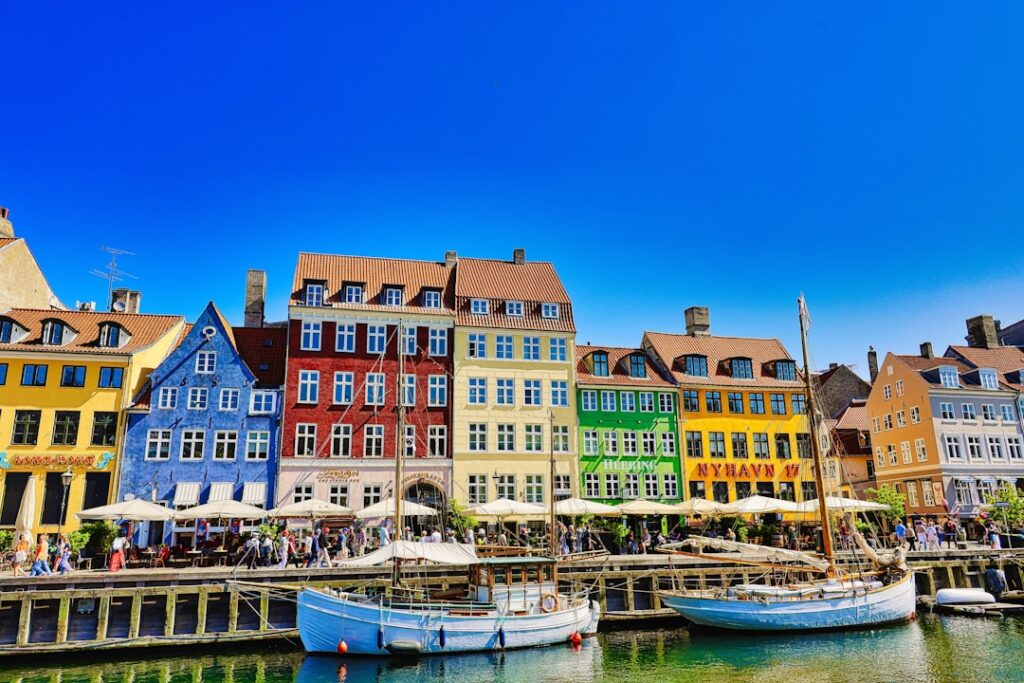
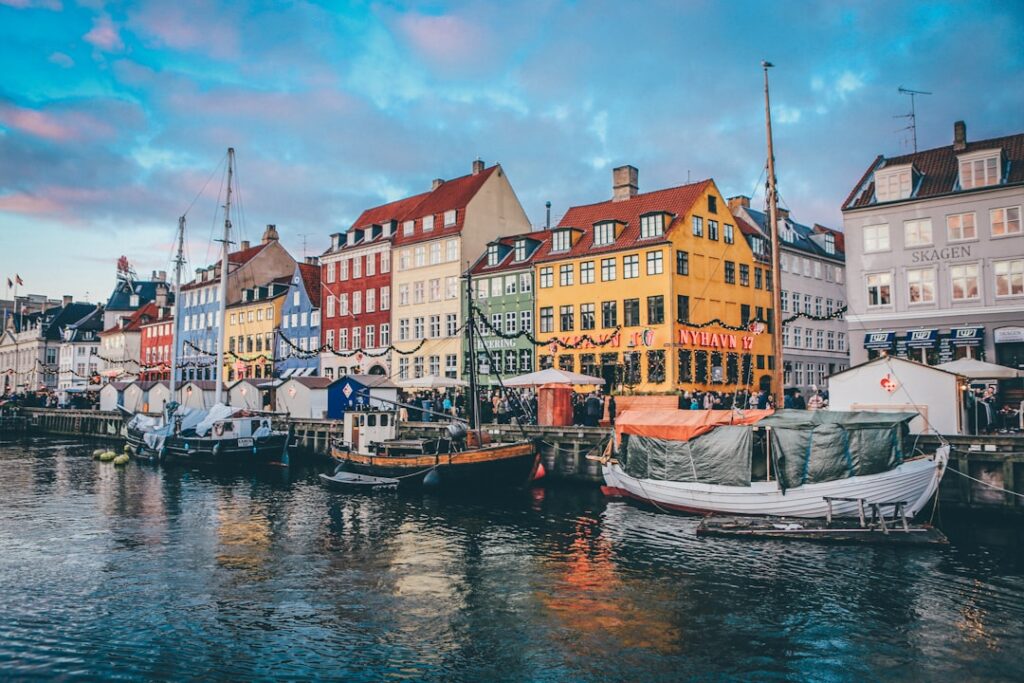
Finally, use local resources in Copenhagen: the Citizen Service at Københavns Rådhus (Rådhuspladsen 1, 1550 København V), SIRI (Nyropsgade 30), and international offices at universities and employers that can provide supporting letters. Also make use of VFS Global or TLScontact services in your country for booking appointments and submitting applications. By following these steps and meeting administrative requirements, your move to Copenhagen stands a good chance of going smoothly — and you’ll soon be enjoying Nyhavn’s canals, Vesterbro’s cafés, and the city’s excellent cycle lanes.