





Introduction — Living and Working in Copenhagen: an Overview for Employees and Freelancers
Moving to Copenhagen as a salaried employee or a freelancer is an exciting adventure, but it comes with paperwork. As Denmark’s capital, Copenhagen combines high quality of life, exceptional cycling infrastructure, and an innovative job market focused on tech, design, renewable energy and professional services. However, to live and work legally you need to understand the differences between EU/EEA/Swiss citizens, third‑country nationals, posted workers and self‑employed people. This detailed guide gives you a clear roadmap: what steps to take, which offices to visit, what documents to prepare, expected costs in euros, and what practical habits to adopt on the ground.
Copenhagen also stands out for precise municipal services and highly digitalized procedures: many processes start online via official portals but still require in‑person appointments to show ID, provide fingerprints or undergo checks. Keywords to remember are: registration with the municipality (Borgerservice), getting a personal identification number (CPR), opening a Danish bank account, health coverage (public system or private top‑ups), and obtaining a residence/work permit via the Danish Immigration Service (Styrelsen for International Recruitment and Integration, SIRI) or at a Danish embassy/consulate depending on your nationality.
Throughout this article you’ll find exact addresses of offices and services (with typical opening hours), fees converted to euros for the most common procedures, immersive descriptions of the places where you’ll submit applications, practical tips for preparing your paperwork (translations, apostilles), and local recommendations (useful counters, coworking spots, cafés to work from, and support organisations). I’ve included concrete reference points — for example the address of Copenhagen City Hall, the location of the central station, and examples of service centres for foreigners — so you can schedule your steps precisely. Fees and opening hours are given in euros and local time; they reflect the general situation in 2024–2025 and should be double‑checked on official sites before you leave.
Before we start, keep two key principles in mind: 1) if you are an EU/EEA/Swiss citizen, the process is simplified but still mandatory (CPR, municipal registration, health coverage), 2) if you come from a third country, procedures depend on the type of work (employment contract, EU Blue Card / Pay Limit / Fast Track schemes, or self‑employed status) and often require prior residence authorisation. This guide walks you through each route step by step and gives precise addresses (Borgerservice, SIRI counters, embassies, banks) to speed up your move.
1) First Step: Arrival, Registration and Getting Your CPR Number
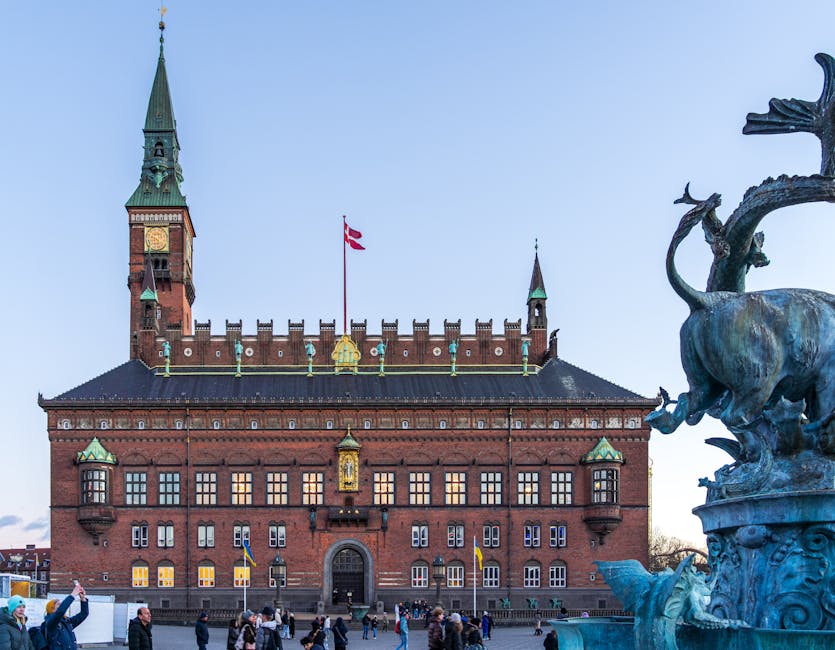
The very first administrative task in Copenhagen is registering with the municipality (Borgerservice) and obtaining the CPR number (personnummer) — Denmark’s equivalent of a social security number — which is essential to open a bank account, register for health coverage and sign a lease. The main place for these formalities is the central Borgerservice – Københavns Kommune (Rådhuset): Rådhuspladsen 1, 1599 København V. Counters are generally open Monday to Friday, 09:00–15:00; on some days service is extended until 17:00. It’s strongly recommended to book an appointment online via the municipality’s official booking system before you show up.
Documents to prepare:
- Passport or national ID card (original + photocopy).
- Signed employment contract if you’re an employee, or proof of freelance activity (client contracts, recent invoices, professional website) if you’re self‑employed.
- Proof of address in Denmark (rental contract, a dated and signed letter from the landlord, sometimes a “Confirmation of address” form often called lejegodtgørelse).
- Proof of sufficient funds (bank statements, job offer indicating salary).
- Completed CPR application form (available online or at the counter).
Costs and timing: registration for the CPR is generally free. The health card (sundhedskort) is mailed within 2–4 weeks after registration. For non‑EU citizens, registration at Borgerservice usually follows the prior grant of a residence permit; however, some offices can issue a provisional registration confirmation. Note: some landlords require a security deposit equal to 1–3 months’ rent; for a studio in Copenhagen, rents typically start around €800–900/month in outer districts and can exceed €1,500–2,500 in the city centre.
2) Work Permits and Residence Permits: Routes Based on Your Status
The type of permit you need depends mainly on your nationality and your employment contract. Below I outline the main scenarios and the typical steps, with indicative contact details for the competent authorities.
A) EU/EEA/Swiss citizens: you don’t need a work permit to work in Denmark. However, you must:
- Register with Københavns Kommune – Borgerservice to obtain a CPR number (address: Rådhuspladsen 1, 1599 København V; opening hours: 09:00–15:00).
- Sign up for the Danish health system via the Sundhedsdatastyrelsen using your CPR to receive the health card (Sundhedskort).
- Open a Danish bank account (e.g. Danske Bank, Holmens Kanal 2-12, 1060 København K, counter hours 10:00–16:00) for salary payments and tax withholdings (SKAT).
These steps are free or only involve possible bank fees (debit card 0–€15 depending on the bank).
B) Third‑country nationals (non‑EU): the route varies.
- Typical employment contract: the employer can apply for a work permit on behalf of the employee via the SIRI website (Styrelsen for International Rekruttering og Integration). General contact address: Vesterbrogade 4A, 1620 København V (check the site for the exact counter). Administrative fees for a main application range roughly from 2,600 DKK to 6,000 DKK depending on the permit type (about €350–800). Processing times vary from a few weeks to several months.
- Fast‑track for skilled talents: certain sectors (IT, engineering, research) offer accelerated procedures (Blue Card / Pay Limit / Fast Track). Criteria include a minimum contractual gross monthly salary (for example, in 2024 thresholds were around 44,000 DKK gross per month for some categories — roughly €5,900). Fees may be in the €500–800 range.
- Self‑employed / freelancer (non‑EU): getting a permit as a self‑employed person is more complex. You’ll need to demonstrate a viable business plan, clients or contracts, financial resources, and sometimes register with the Danish business register (CVR). Applications go through SIRI and may include an interview. Legal and administrative costs (translations, apostilles) can easily add €600–2,000 if you use a lawyer or consultant.
C) Temporary posting: if your employer posts you from abroad, specific rules for posted workers apply (including European posting regulations and bilateral agreements for non‑EU companies). It is often required to inform SKAT (the tax authority) and present documentation at the local authorities’ counters.
3) Taxes, Social Security and Insurances: What You Need to Know Locally
Once you have your CPR and your permit is in order, tax and social security issues become a priority. Denmark operates largely with withholding tax for most employees: employers deduct tax (Skat) from wages. Freelancers are organised differently: you must declare income, pay instalments and social contributions where applicable.
Taxes and filings:
- SKAT (Danish Tax Agency) — address: Skattestyrelsen, Carl Jacobsens Vej 35, 2500 Valby (check the exact office by region). For newcomers and non‑residents, the site skat.dk provides guides and calculators. The marginal tax rate varies widely depending on municipality and income level (national average roughly 38–56% including municipal taxes and contributions). Freelancers must register for VAT (momssystem) if turnover exceeds 50,000 DKK over 12 months (≈ €6,700).
- NemKonto number: every resident is assigned a public payment account (NemKonto) for tax refunds and benefit payments. You activate it by choosing a Danish bank.
Social security and health insurance:
- After CPR registration you receive the Sundhedskort (health card). It gives access to public healthcare services (GPs, emergency care). For appointments, clinics (e.g. lægepraksis) usually accept patients registered in the national system. Emergency services at public hospitals are available 24/7; for non‑life‑threatening urgent issues, head to Rigshospitalet, Blegdamsvej 9, 2100 København Ø (emergency reception).
- For private supplementary insurance or international health coverage (recommended for the initial months), prices vary: a basic international policy costs around €30–120/month depending on age and coverage; comprehensive family plans can reach €200–400/month.
Practical tips:
- Open an account with a Danish bank as soon as you have a CPR; recommended banks include Danske Bank (Holmens Kanal 2-12, 1060 København K), Nordea (Strandgade 3, 1401 København K) and Nykredit for investment services. A Danish debit card and IBAN are essential for most employers.
- For accounting as a freelancer, consider invoicing software (e-conomic, Billy) and a tax advisor (revisor). Rates for a freelance accountant start around €50–120/hour; monthly packages for small activities begin at €100–300/month.
4) Professional Life and Settling In: Coworking, Useful Addresses and Local Tips
Integrating professionally in Copenhagen relies on networking and adapting to the local work culture: punctuality, transparent contracts, work‑life balance, and widespread use of English in startups and consulting. Here’s a collection of useful addresses and places to work, network and settle in quickly.
Coworking spaces and hubs:
- Founders House (incubator & coworking) — Vesterbrogade 6A, 1620 København V. Opening hours: 08:00–20:00. Monthly memberships from around €150 (hot desk) to €400 (private office).
- Copenhagen Coworking (CWC) — Møntmestervej 8, 2450 København SV. Hours and pricing vary; day passes start at €15 and monthly plans €100–300.
- Kontorhotellet KPH — Østerbrogade 70, 2100 København Ø: close to residential neighbourhoods popular with expats.
Networking and support:
- International House Copenhagen — an arrival centre for expats (check address and opening hours on the official site). They run workshops, tax information sessions and employment support.
- Meetups and industry events: Copenhagen Tech Meetups, Startup Weekend Copenhagen, and expat associations (Expat in Denmark). Events are often hosted at the CPH Conference Center or in downtown cafés/coworking venues.
Logistics for settling in:
- Transport: the Rejsekort is the convenient travel card for public transport (metro, buses, S‑train). The main hub is Københavns Hovedbanegård (Copenhagen Central Station), Bernstorffsgade 16, 1577 København V; ticket counters are usually open 06:00–22:00.
- Bicycle: it’s essential for getting around; recommended shops for buying new bikes or repairs include Copenhagen Bike Company (Østerbrogade). Prices for an urban bike range from €250–900 depending on condition and model.
- Postal services and notarisation: PostNord has multiple offices; for apostilles, check with your embassy or the Danish Ministry of Foreign Affairs.
Local practical advice:
- Learn some basic Danish: although English is widely spoken, a few simple phrases make daily life and business interactions easier.
- Keep both digital and printed copies of all documents (contracts, permits, invoices). Authorities often request original documents for verification.
- Plan a transition budget: at least three months’ expenses (rent, food, insurance, transport); Copenhagen is an expensive city — a reasonable monthly living budget for a single person is around €1,800–2,500 excluding rent, and €2,500–4,000 if you want a more comfortable city‑centre lifestyle.

Conclusion — Summary of Steps and Recommendations for a Successful Move
Moving to Copenhagen as an employee or freelancer takes preparation, patience and solid organisation. Key steps are to determine your legal status (EU citizen vs third‑country national), obtain the appropriate permit (or know that you don’t need one if you’re an EU national), register with the municipality (Borgerservice) to get your CPR number, open a Danish bank account, sign up for the health system (Sundhedskort), and take care of your tax obligations with SKAT. For non‑EU freelancers, building a strong file (contracts, client proof, business plan) and possibly hiring an immigration lawyer can speed up success.
Copenhagen rewards the effort with high quality of life, a dynamic innovation ecosystem and infrastructure that eases personal and professional integration. Expect living costs above the European average, but balance that with generally well‑paid job opportunities (depending on sector) and efficient public services. Use the addresses and services listed in this guide: Borgerservice – Rådhuspladsen 1, 1599 København V for CPR, Skattestyrelsen – Carl Jacobsens Vej 35, 2500 Valby for tax matters, and coworking spaces (Founders House, Copenhagen Coworking) to build your network and find a suitable workspace.
Finally, my practical tips in brief: 1) prepare your documents (passport, contracts, proof of address, financial evidence) before you leave; 2) book online appointments for Borgerservice and banks to avoid queues; 3) plan for three months of transition budget; 4) invest in a good tax/accounting advisor if you freelance; 5) join local communities and meetups to speed up integration. Always check the latest information on official sites (SIRI, SKAT, Københavns Kommune) as rules and fees can change. With the right preparation, settling in Copenhagen can be a rewarding professional and personal opportunity in one of Europe’s most welcoming capitals for international talent.